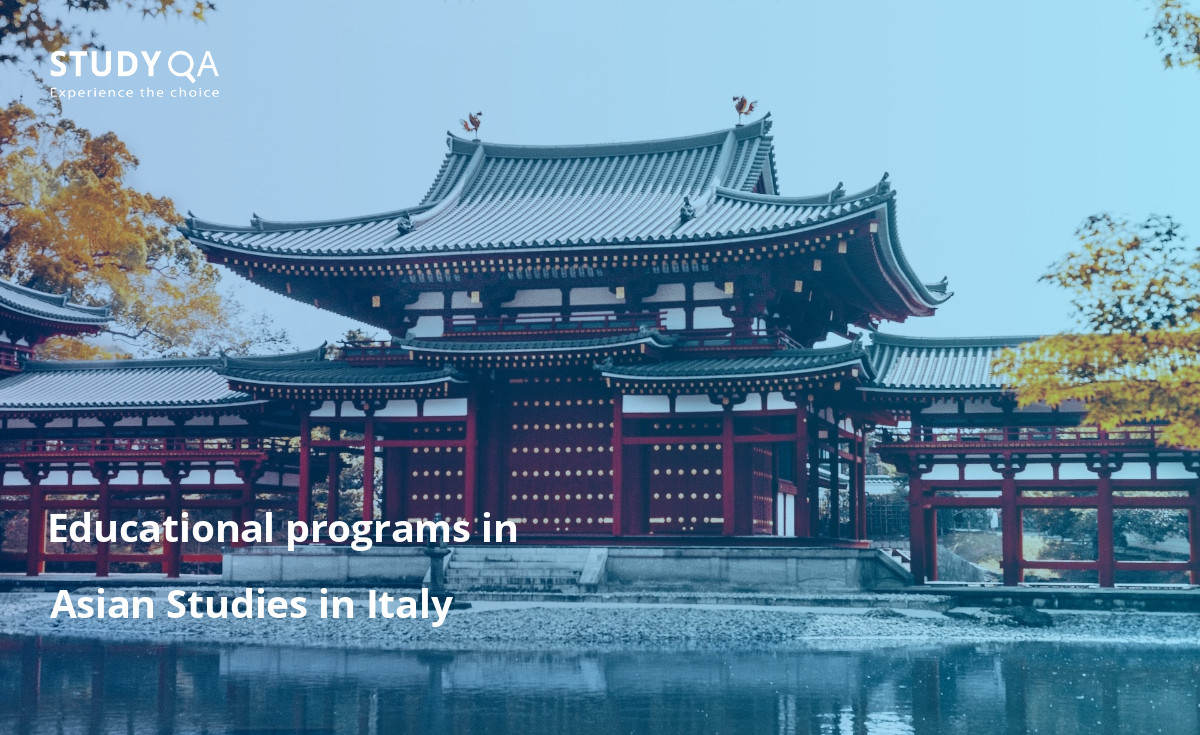
 Educational programs in Asian Studies in Italy
Explore the cultural and historical heritage of Asia through higher education programs in Asian Studies in Italy. Learn about multidisciplinary approaches, language learning and the key features of the degree in Asian Studies. Advance your career in business, government, education, or research with a comprehensive understanding of Asia and its cultures.
Higher education programs in Asian Studies in Italy offer students the opportunity to explore the rich cultural and historical heritage of Asia, as w...
Higher education programs in Asian Studies in Italy offer students the opportunity to explore the rich cultural and historical heritage of Asia, as well as its modern political, economic, and social developments. These programs are designed to provide students with a comprehensive understanding of the region, and to equip them with the skills and knowledge necessary to succeed in a variety of professional and academic careers.
Key features of the program
One of the key features of higher education programs in Asian Studies in Italy is the focus on multidisciplinary approaches. This means that students will have the opportunity to study a wide range of subjects, including history, politics, economics, sociology, anthropology, and language, in order to gain a comprehensive understanding of Asia and its various cultures.
In addition to multidisciplinary approaches, many higher education programs in Asian Studies in Italy also place a strong emphasis on language learning. This is because fluency in one or more Asian languages is considered essential for those who wish to work in or study the region. As a result, students will typically be required to take courses in Chinese, Japanese, Korean, or other Asian languages, depending on the program they choose.
One of the most popular higher education programs in Asian Studies in Italy is the Bachelor's degree in Asian Studies, which is typically offered at universities and colleges throughout the country. This program typically takes three or four years to complete, and students will be required to take a combination of core courses and electives in order to gain a comprehensive understanding of the region.
Program structure
Some of the core courses that students may be required to take include:
Introduction to Asian Studies: This course provides students with a broad overview of the region, including its history, culture, politics, and economics.
Asian History: This course covers the history of Asia from ancient times to the present day, with a focus on key events, movements, and leaders.
Asian Politics: This course examines the political systems of various Asian countries, including their governments, institutions, and political parties.
Asian Economics: This course explores the economic systems and developments of various Asian countries, including their trade, industry, and agriculture.
In addition to these core courses, students will also be required to take a number of electives in order to specialize in a specific area of interest. Some of the electives that may be available include:
Chinese Literature: This course covers the literature of China from ancient times to the present day, with a focus on key literary works and authors.
Japanese Culture: This course explores the culture of Japan, including its art, music, food, and customs.
Korean Language: This course covers the basics of the Korean language, including grammar, vocabulary, and pronunciation.
Southeast Asian Studies: This course examines the cultures, politics, and economies of Southeast Asian countries such as Indonesia, Malaysia, and the Philippines.
After completing a Bachelor's degree in Asian Studies, students may choose to continue their studies at the graduate level by pursuing a Master's or Ph.D. degree in Asian Studies. These programs typically take one or two years to complete and provide students with a more in-depth understanding of the region and its various cultures, as well as the opportunity to specialize in a specific area of interest.
Overall, higher education programs in Asian Studies in Italy offer students the opportunity to gain a comprehensive understanding of the region and its various cultures, as well as the skills and knowledge necessary to succeed in a variety of professional and academic careers. Whether you're interested in pursuing a career in business, government, education, or research, a degree in Asian Studies can be a valuable asset.
Study programs (11)

Student Accommodation
 201–250 place
StudyQA ranking:
18 pts.
No. Students:
113494
Frgn. Students:
9234
No. Staff:
7000
Languages:
Italian
Phone:
+390649911
401–500 place
StudyQA ranking:
17 pts.
No. Students:
23500
Frgn. Students:
1500
No. Staff:
2700
Languages:
Italian
Phone:
+390382984020
201–250 place
StudyQA ranking:
18 pts.
No. Students:
113494
Frgn. Students:
9234
No. Staff:
7000
Languages:
Italian
Phone:
+390649911
401–500 place
StudyQA ranking:
17 pts.
No. Students:
23500
Frgn. Students:
1500
No. Staff:
2700
Languages:
Italian
Phone:
+390382984020
 601–800 place
StudyQA ranking:
10 pts.
No. Students:
20795
No. Staff:
1555
Languages:
Italian
Phone:
+390412348111
601–800 place
StudyQA ranking:
10 pts.
No. Students:
20795
No. Staff:
1555
Languages:
Italian
Phone:
+390412348111
 Currency
 EUR
EUR GBP
GBP KZT
KZT INR
INR RUB
RUB