A university program for a master's degree introduces students to various wireless and mobile communication technologies, such as cellular networks,...
A university program for a master's degree introduces students to various wireless and mobile communication technologies, such as cellular networks, satellite communications, and radio frequency. The program provides comprehensive knowledge of the fundamentals of this field while also incorporating advanced topics such as optimization techniques, multimedia, and broadband systems. Graduates will be able to effectively use theoretical concepts in order to design and implement new systems or modify existing ones.
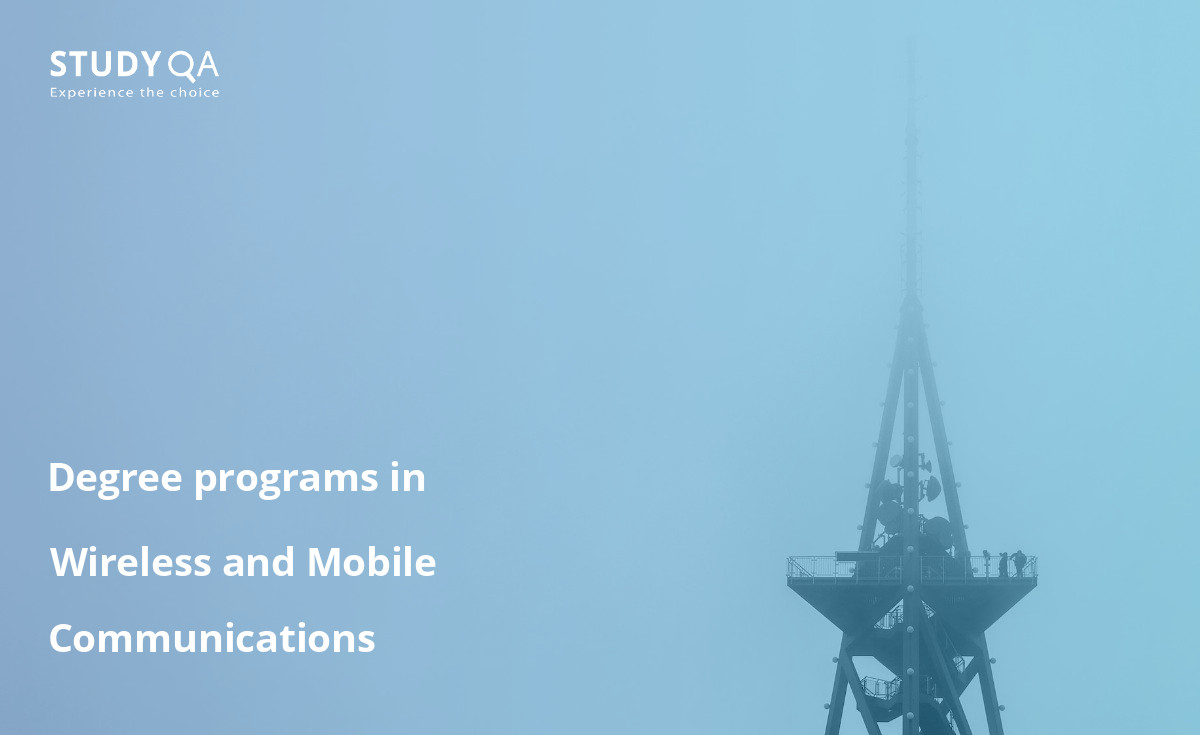
University programs related to wireless systems have quickly become popular among students due to their comprehensive course content. These courses provide students with the basic knowledge and skills necessary for designing, developing, and deploying different types of wireless systems. As such, the courses are covering topics of mobile cellular communications, frequency reuse, call processing, propagation loss, multipath fading, and techniques for reducing fades. Other topics include modulation methods, FDMA, TDMA, and CDMA techniques, microcell issues, mobile satellite systems, and GSM, cdmaOne, GPRS, EDGE, cdma2000, W-CDMA, LTE, 5G, 6G, and beyond network and communication, intelligent wearables, smart agriculture, transportation, environmental monitoring, and landslide detection in cities.
The knowledge you will gain as a result of successfully completing this program:
Know about flow control and congestion control of wireless networks.
Understand the techniques for allocating resources in wireless communication systems.
Be familiar with some routing algorithms, delay modelling, and principles of multiple access.
Be knowledgeable about cellular networks and architectures.
Be conversant with the basics of WLAN, ad hoc, and sensor networking.
Because of the fast rise of communication and globalization, an increasing number of individuals are replacing wired communication technology with cheaper, smarter, and simpler wireless communication technology. Telecommunication engineering, satellite communication, the production and operation of telecommunication devices, and other related professions are in high demand in both the public and commercial sectors.
You can explore a variety of career options after earning your degree in wireless communication, such as working for a wireless service provider or research organization as a communications specialist. As an IT assistant or customer service representative, you could also work in a computer centre to assist people with managing technology. Your main focus could be on making sure the communication process is efficient and accurate.
While choosing a school you should pay attention, not to the overall ranking of the college, but to what courses and departments it is famous for! The University of Southampton, for instance, is among the top-ranked universities for Telecommunication Engineering in Europe by ShanghaiRanking's Global Ranking of Academic Subjects 2017-2020. The good news is you can find all the necessary information about tuition fees, program courses, and admission requirements at Southampton University on the StudyQA website.
Study programs (26)




Student Accommodation

 127 place
StudyQA ranking:
8290 pts.
No. Students:
23795
No. Staff:
5000
Languages:
English
Phone:
+4402380595000
Fax:
+442380593131
601–800 place
StudyQA ranking:
7483 pts.
No. Students:
18945
Languages:
English
Phone:
+4402083318000
401–500 place
StudyQA ranking:
5736 pts.
No. Students:
22349
No. Staff:
5100
Languages:
Norwegian (nynorsk), English
Phone:
+4773595000
Fax:
+4773595310
127 place
StudyQA ranking:
8290 pts.
No. Students:
23795
No. Staff:
5000
Languages:
English
Phone:
+4402380595000
Fax:
+442380593131
601–800 place
StudyQA ranking:
7483 pts.
No. Students:
18945
Languages:
English
Phone:
+4402083318000
401–500 place
StudyQA ranking:
5736 pts.
No. Students:
22349
No. Staff:
5100
Languages:
Norwegian (nynorsk), English
Phone:
+4773595000
Fax:
+4773595310

 35 place
StudyQA ranking:
4597 pts.
No. Students:
25797
No. Staff:
6113
Languages:
English
Phone:
+4402078365454
35 place
StudyQA ranking:
4597 pts.
No. Students:
25797
No. Staff:
6113
Languages:
English
Phone:
+4402078365454





 Currency
 EUR
EUR GBP
GBP KZT
KZT INR
INR RUB
RUB