Scientists studying planets and the atmosphere are also curious about the Earth. They are interested in the resources of the Earth: from soils to oce...
Scientists studying planets and the atmosphere are also curious about the Earth. They are interested in the resources of the Earth: from soils to oceans, atmosphere and land. The Department of Earth and Atmospheric Sciences unites a close-knit group of teachers, staff and students who constantly interact with each other in the study of their discipline. Full-time teachers teach all courses at the department. The Faculty of Earth and Atmospheric Sciences offers three degrees: Bachelor of Science in Earth Sciences (B.S.), Bachelor of Arts in Earth and Atmospheric Sciences (B.A.) and Bachelor of Science in Atmospheric Sciences (B.S.).
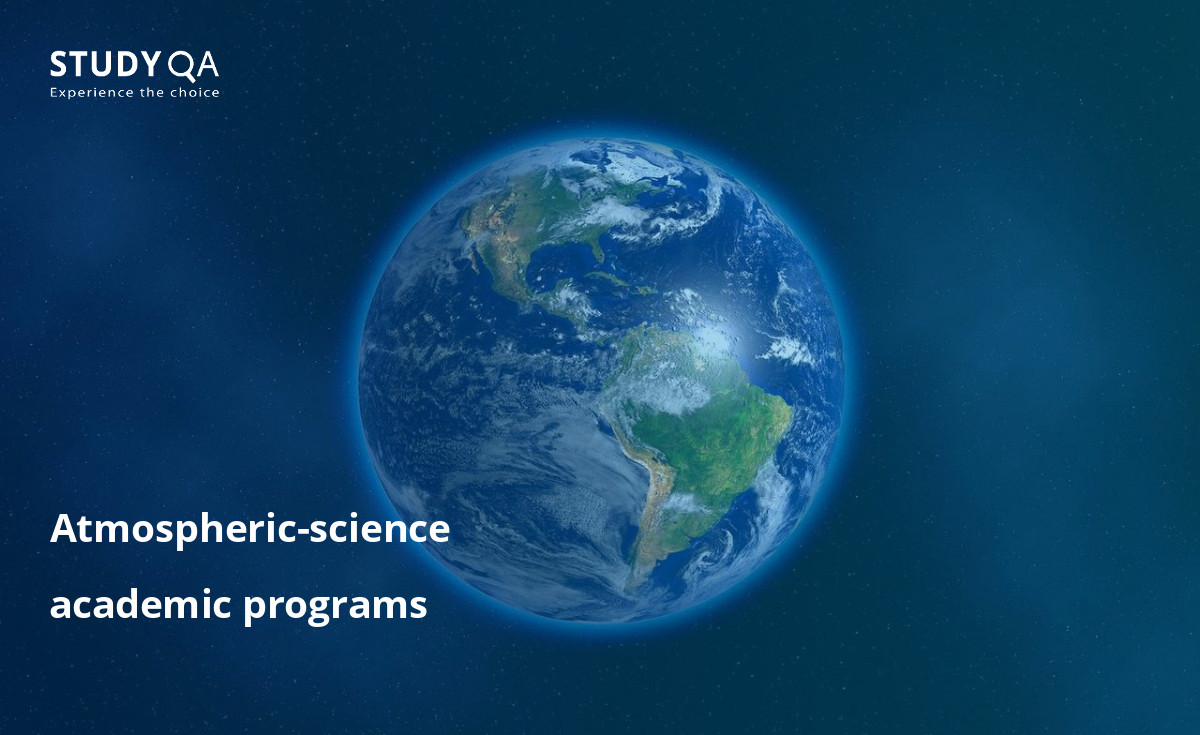
Three degrees start with similar coursework, so it's easy change your path as your interests develop. Atmospheric science is the study of meteorology and climate, the purposeful study of short–term weather changes in the stratosphere and troposphere. Climate science focuses on longer periods of time, from one month to millions of years. The main goal is to describe the interaction of the atmosphere with the earth's surface: oceans, lakes, land and glaciers. The Bachelor of Atmospheric Sciences degree requires the study of the earth and atmospheric processes, as well as mathematical analysis, physics, chemistry, biology and in-depth work in the field of natural sciences.
The prospects
A degree in atmospheric sciences will allow you to solve important problems such as renewable energy and natural resources, environmental pollution, global climate change (especially warming), severe weather and its consequences, as well as assessment of natural hazards and preparedness for them (for example, earthquakes, volcanic eruptions, hurricanes and tornadoes). Students will be able to apply their knowledge in the following areas: agricultural sciences, architecture, planning and development, environment and sustainable development, interdisciplinary research, physical and space sciences.
The degree in Integrated Atmospheric and Hydrological Sciences allows students to focus on their chosen scientific plan. Atmospheric scientists are engaged in combating climate change and the effects of severe weather conditions on communities at risk. Students receiving a Bachelor of Science degree in Hydrology and atmospheric Sciences can choose the direction of "Atmospheric Sciences", which focuses on weather and climate analysis, forecasting and assessment of impacts on the planet and people. In accordance with the requirements of the National Meteorological Service, the American Meteorological Society and the World Meteorological Organization, this specialty allows you to choose various professions, including work in large corporations, non-profit organizations and government agencies.
Study programs (14)



Student Accommodation
 1 place
StudyQA ranking:
12347 pts.
No. Students:
22348
Frgn. Students:
5655
No. Staff:
12510
Languages:
English
Phone:
+441865270000
Fax:
+441865270708
1 place
StudyQA ranking:
12347 pts.
No. Students:
22348
Frgn. Students:
5655
No. Staff:
12510
Languages:
English
Phone:
+441865270000
Fax:
+441865270708
 107 place
StudyQA ranking:
6589 pts.
No. Students:
34160
Frgn. Students:
5000
Languages:
English
Phone:
+4401214143344
Fax:
+44 (0)121 414 3971
51 place
StudyQA ranking:
6314 pts.
No. Students:
34470
Frgn. Students:
12277
No. Staff:
4626
Languages:
English
Phone:
+4401613066000
Fax:
+4401612752058
107 place
StudyQA ranking:
6589 pts.
No. Students:
34160
Frgn. Students:
5000
Languages:
English
Phone:
+4401214143344
Fax:
+44 (0)121 414 3971
51 place
StudyQA ranking:
6314 pts.
No. Students:
34470
Frgn. Students:
12277
No. Staff:
4626
Languages:
English
Phone:
+4401613066000
Fax:
+4401612752058
 9 place
StudyQA ranking:
5567 pts.
No. Students:
8010
Frgn. Students:
1843
No. Staff:
1172
Languages:
English
Phone:
+16092583000
Fax:
+16092586743
9 place
StudyQA ranking:
5567 pts.
No. Students:
8010
Frgn. Students:
1843
No. Staff:
1172
Languages:
English
Phone:
+16092583000
Fax:
+16092586743
 35 place
StudyQA ranking:
4597 pts.
No. Students:
25797
No. Staff:
6113
Languages:
English
Phone:
+4402078365454
35 place
StudyQA ranking:
4597 pts.
No. Students:
25797
No. Staff:
6113
Languages:
English
Phone:
+4402078365454

 301–350 place
StudyQA ranking:
2331 pts.
No. Students:
23085
Frgn. Students:
6030
No. Staff:
2203
Languages:
English
Phone:
+16316326000
301–350 place
StudyQA ranking:
2331 pts.
No. Students:
23085
Frgn. Students:
6030
No. Staff:
2203
Languages:
English
Phone:
+16316326000




 Currency
 EUR
EUR GBP
GBP KZT
KZT INR
INR RUB
RUB