The Dutch Studies Program is of unique national and international importance. It offers a comprehensive education in the Dutch language, literature,...
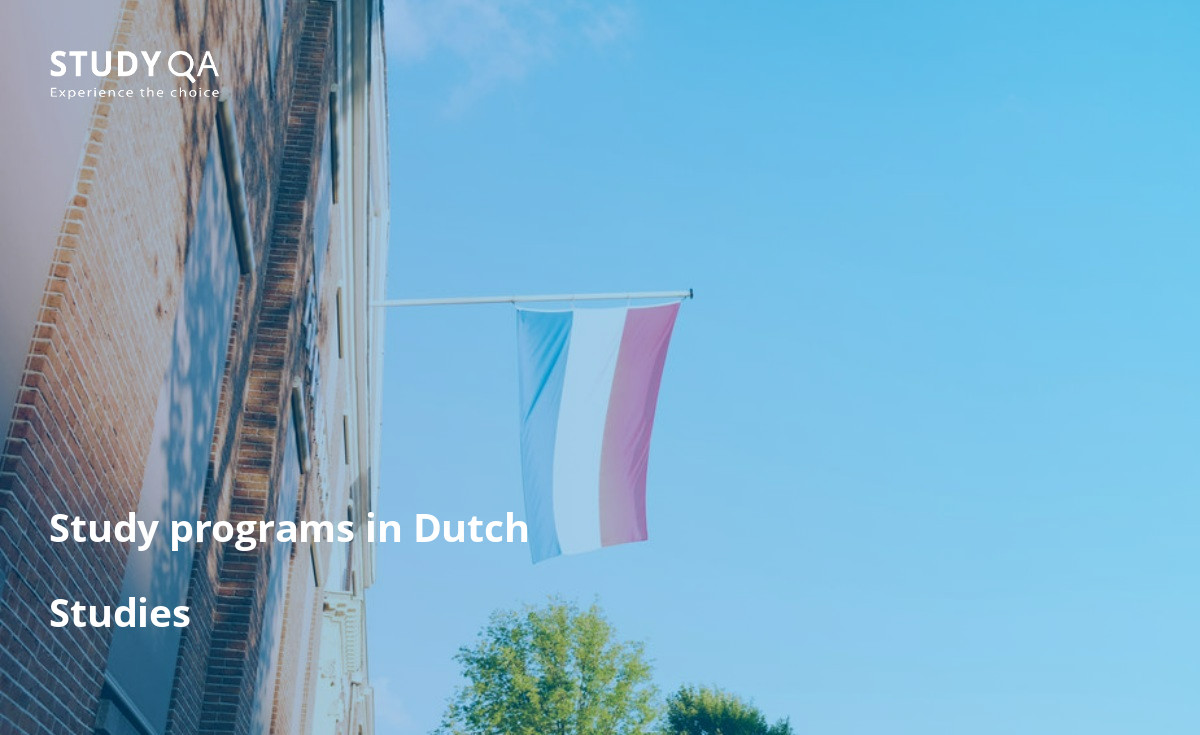
The Dutch Studies Program is of unique national and international importance. It offers a comprehensive education in the Dutch language, literature, cultural history, and linguistics. Learn about the language, literature, culture, and history of the Netherlands. Dutch Studies offers English-taught courses on Dutch cultural history, literature, and linguistics, as well as Dutch language courses.
Why study Dutch Studies?
Although the Netherlands and the Dutch language have had an important historical, cultural, and philosophical influence on the world, few people can pronounce Vincent van Gogh's name correctly. It provides a thorough education in Dutch linguistics, literature, culture, and history.
Become part of the development of science that integrates teaching and research for the advancement and well-being of people in the fields of the Dutch language, linguistics, literature, and culture.
Study in Dutch studies
The bachelor's degree in Dutch studies is an intensive 4-year program. Upon graduation, you'll receive a Bachelor of Arts (BA) degree. Approximately one-third of the program is dedicated to language acquisition, and the rest of the curriculum is introductory and specialist courses on Dutch linguistics, literature, history, and art history.
The master’s degree offered by universities of applied sciences is to increase your knowledge and professional expertise at the graduate level. The focus is on further improving your professional competence and clinical and analytical skills and preparing you for managerial and leadership positions in a particular field.
Curriculum Goals
To produce reliable graduates who have expertise in the Dutch language, linguistics, literature, and culture, who are responsible, critical thinkers, sensitive and creative, and who adapt easily as part of a dignified and cultural digital society;
Conducting research and public works in the Dutch language, linguistics, literature, and culture that are of high quality and relevant to national and global challenges.
The learning outcomes of the Dutch Curricula:
the ability to communicate orally and in writing in the Dutch language.
the ability to critically analyze Dutch language data.
the ability to critically analyze and evaluate Dutch literary works.
the ability to critically analyze and evaluate symptoms and socio-cultural problems of the Netherlands.
be able to present the results of analysis and evaluation in the form of oral or written presentations in a creative, efficient, and effective manner using information technology media.
The foundation of your career
The program will be useful for students who want to continue their studies at the doctoral level as well as those who want to improve their knowledge of Dutch culture for professional reasons, such as in the fields of education, media, commerce, and tourism.
Employability
Dutch is one of the languages that UK employers most frequently request because it is widely spoken throughout the Netherlands, Flanders, Suriname, and parts of the Caribbean. Dutch is a very useful skill to have in an increasingly competitive job market.
Since there aren't many graduates who speak Dutch, the job market is always active, even during economic downturns. Graduates who can fill the gap in English-to-Dutch translators and Dutch-to-English teachers are in high demand. The demand for teachers may come from higher education and secondary schools, while the demand for translators may come from Dutch, Belgian, and European institutions, translation agencies, and from businesses.
Study programs (22)
Student Accommodation
 70 place
StudyQA ranking:
9218 pts.
No. Students:
25800
Frgn. Students:
2800
No. Staff:
5500
Languages:
Dutch, English
Phone:
+31715272727
Fax:
+31715273118
70 place
StudyQA ranking:
9218 pts.
No. Students:
25800
Frgn. Students:
2800
No. Staff:
5500
Languages:
Dutch, English
Phone:
+31715272727
Fax:
+31715273118
 16 place
StudyQA ranking:
9172 pts.
No. Students:
26700
Frgn. Students:
7000
No. Staff:
6840
Languages:
English
Phone:
+4402076792000
80 place
StudyQA ranking:
7585 pts.
No. Students:
29407
No. Staff:
5000
Languages:
Dutch, English
Phone:
+31503639111
16 place
StudyQA ranking:
9172 pts.
No. Students:
26700
Frgn. Students:
7000
No. Staff:
6840
Languages:
English
Phone:
+4402076792000
80 place
StudyQA ranking:
7585 pts.
No. Students:
29407
No. Staff:
5000
Languages:
Dutch, English
Phone:
+31503639111

 121 place
StudyQA ranking:
4860 pts.
No. Students:
16000
Frgn. Students:
7500
No. Staff:
1814
Languages:
Dutch, English
Phone:
+31433885388
121 place
StudyQA ranking:
4860 pts.
No. Students:
16000
Frgn. Students:
7500
No. Staff:
1814
Languages:
Dutch, English
Phone:
+31433885388
 66 place
StudyQA ranking:
4032 pts.
No. Students:
31186
No. Staff:
4794
Languages:
Dutch, English
Phone:
+31205251400
66 place
StudyQA ranking:
4032 pts.
No. Students:
31186
No. Staff:
4794
Languages:
Dutch, English
Phone:
+31205251400
 Currency
 EUR
EUR GBP
GBP KZT
KZT INR
INR RUB
RUB