Technology at the cutting edge in areas like materials science, optics, and electronics are all involved in astrophysics. Students learn how to apply...
Technology at the cutting edge in areas like materials science, optics, and electronics are all involved in astrophysics. Students learn how to apply their physics expertise to astronomical observation and the analysis of the data and images produced through the curriculum.
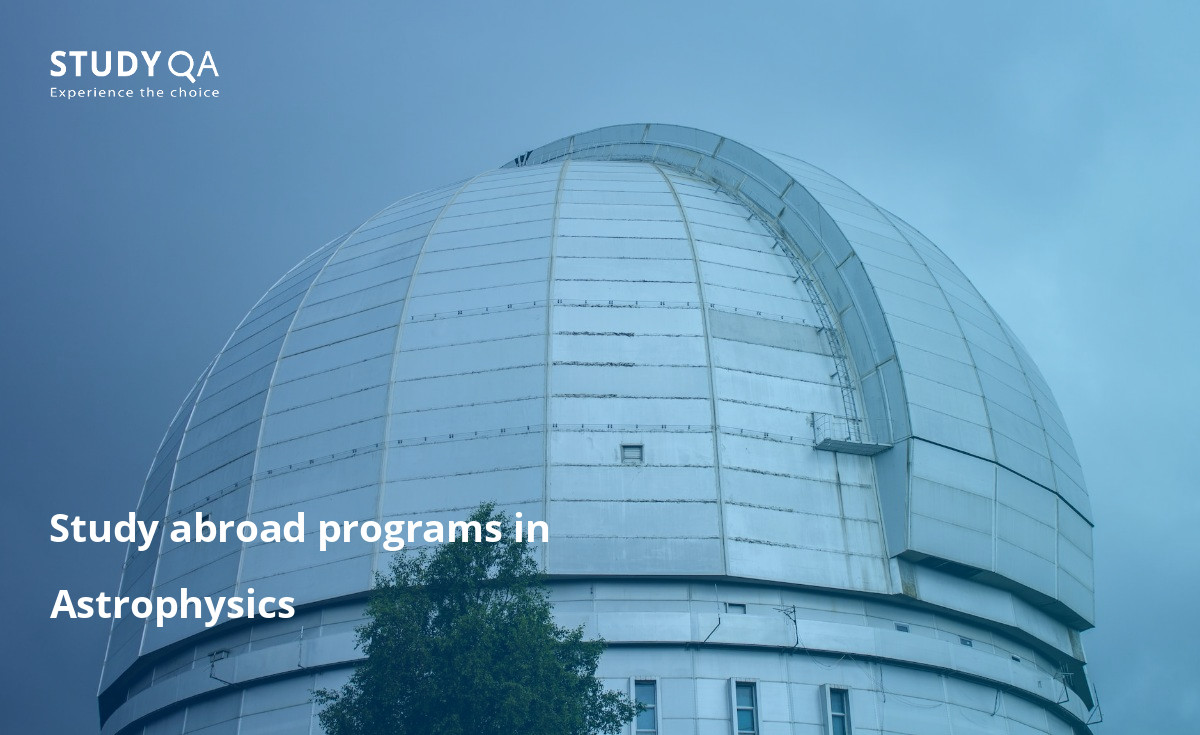
Dramatic astronomical discoveries and unparalleled data collection have occurred recently. Therefore, this is a highly exciting moment to work in astrophysics and gain a profound understanding of the current big scientific debates.
What will you study?
The goal of the subject of research is to provide comprehensive responses to many queries regarding the genesis of stars and their life cycles. Along with the cosmos as a whole, it also addresses concerns related to galaxies and planets. The BSc Astrophysics degree program is renowned for its rigorous and dynamic approach to issues relating to the cosmos. At the undergraduate level, the degree program aids in the introduction of superior research knowledge and abilities. In order to provide them with the best opportunity to master the skills and information necessary for their final-year projects, students are actively involved in the learning process. As a result, BSc Astrophysics is a practical program built mostly on hands-on learning experiences.
During the first year of your studies, you will be required to take math and physics courses The course offers an engaging learning environment and makes creative use of technology. Your ability to solve problems and learn will improve as a result of this introductory course.
You will learn about a variety of physics subjects and how they affect our knowledge of the universe, such as introduction to quantum mechanics waves, and particle and nuclear physics, an introduction to academic laboratory work is also included.
You will learn mathematical and problem-solving techniques in the setting of algebra and calculus with a growing emphasis on physical applications. Additionally, you have the choice of taking Introductory Astrophysics or Discovering Astronomy and Astrobiology. You can choose to take classes in academic fields other than your own.
In the second year, you'll research current physics as well as the physics of fields and matter. Courses in supporting mathematics will include algebraic calculus, vector calculus, and dynamics. Additionally, you will learn about applied physics, such as programming approaches for data analysis and experimentation.
The third year will be followed by thermodynamics, mechanical statistics, electromagnetism, optics, quantum theory, and an accompanying math course covering statistics, probability, and Fourier analysis.
And your last year of studies will cover the following topics: relativity, cosmology, astrophysics, particle, and nuclear physics. The curriculum includes a variety of specialized courses throughout the honours years. There are several alternative courses available, including astrophysics at High Energy, matter and radiation, galaxies in computational astrophysics, and advanced cosmology of Stellar evolution. Additionally, you'll participate in project tasks.
Career Opportunities
Many different employers are aware of the sophisticated problem-solving abilities and capacity for critical and logical thought possessed by physics graduates. You will have prospects in a wide variety of occupations due to the high degree of mathematical aptitude, IT competency, and communication skills. Various Industries are in need of physicists, including engineering, manufacturing, energy, finance, medicine, and of course space. Many graduates continue their education, by pursuing a postgraduate diploma in education, a master's degree in science or engineering, or a Ph.D.
Study programs (38)





Student Accommodation

 1 place
StudyQA ranking:
12347 pts.
No. Students:
22348
Frgn. Students:
5655
No. Staff:
12510
Languages:
English
Phone:
+441865270000
Fax:
+441865270708
1 place
StudyQA ranking:
12347 pts.
No. Students:
22348
Frgn. Students:
5655
No. Staff:
12510
Languages:
English
Phone:
+441865270000
Fax:
+441865270708
 16 place
StudyQA ranking:
9172 pts.
No. Students:
26700
Frgn. Students:
7000
No. Staff:
6840
Languages:
English
Phone:
+4402076792000
16 place
StudyQA ranking:
9172 pts.
No. Students:
26700
Frgn. Students:
7000
No. Staff:
6840
Languages:
English
Phone:
+4402076792000

 59 place
StudyQA ranking:
7347 pts.
No. Students:
20934
Frgn. Students:
5566
No. Staff:
3958
Languages:
English
Phone:
+61261255111
Fax:
+61261250751
59 place
StudyQA ranking:
7347 pts.
No. Students:
20934
Frgn. Students:
5566
No. Staff:
3958
Languages:
English
Phone:
+61261255111
Fax:
+61261250751

 107 place
StudyQA ranking:
6589 pts.
No. Students:
34160
Frgn. Students:
5000
Languages:
English
Phone:
+4401214143344
Fax:
+44 (0)121 414 3971
107 place
StudyQA ranking:
6589 pts.
No. Students:
34160
Frgn. Students:
5000
Languages:
English
Phone:
+4401214143344
Fax:
+44 (0)121 414 3971


 9 place
StudyQA ranking:
5567 pts.
No. Students:
8010
Frgn. Students:
1843
No. Staff:
1172
Languages:
English
Phone:
+16092583000
Fax:
+16092586743
9 place
StudyQA ranking:
5567 pts.
No. Students:
8010
Frgn. Students:
1843
No. Staff:
1172
Languages:
English
Phone:
+16092583000
Fax:
+16092586743










 Currency
 EUR
EUR GBP
GBP KZT
KZT INR
INR RUB
RUB