Mechatronics is an interdisciplinary field that refers to the skills needed in the modern and advanced automated manufacturing industry. At the junct...
Mechatronics is an interdisciplinary field that refers to the skills needed in the modern and advanced automated manufacturing industry. At the junction of mechanics, electronics and computer science, mechatronics specialists create simpler and more intelligent systems. Mechatronics is an important foundation for the expected growth in automation and manufacturing. Mechatronics deals with robotics, control systems and electromechanical systems Do you like mechanics, robotics or production equipment? Do you have a talent for creative problem solving? Do you like engineering classes? Can you work well in a team? Mechatronics may be for you.
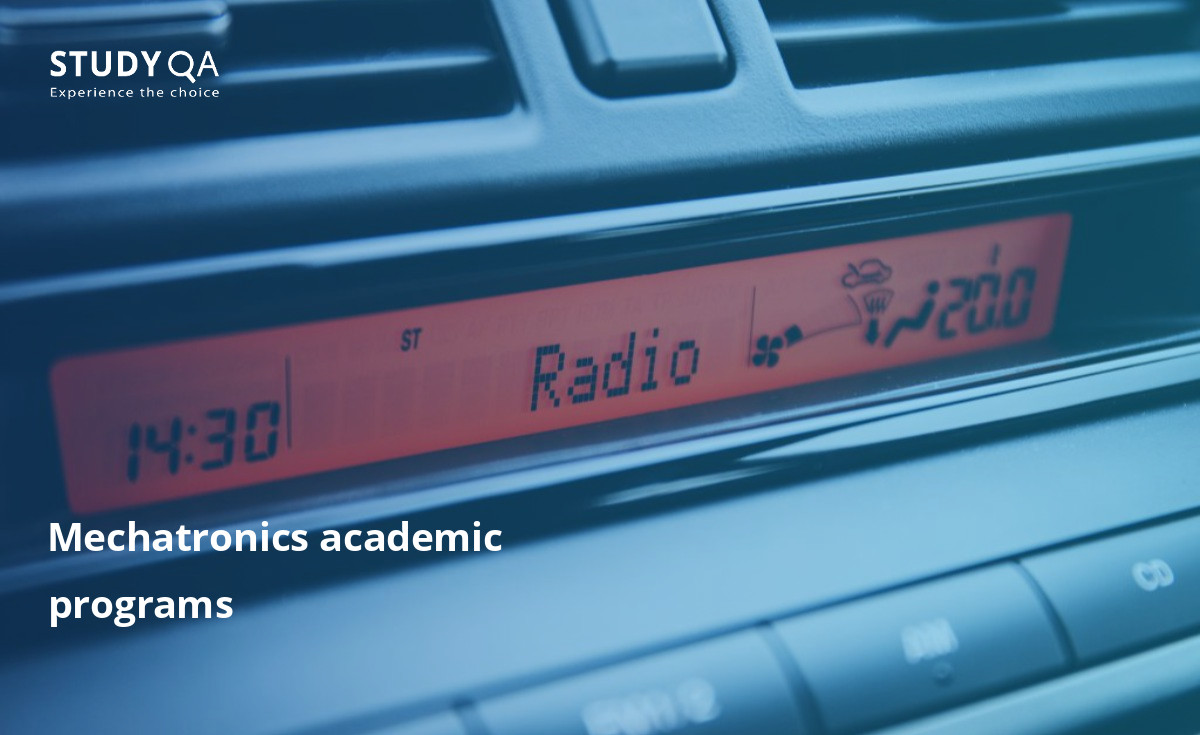
Mechatronics is an emerging field that combines mechanical engineering, electrical engineering and computer science for the design, assembly and operation of intelligent machines. The Mechatronics Degree offers an interdisciplinary program that combines classroom instruction with laboratory courses and allows students to work with components, systems and technologies used in real-world work in the field of mechatronics. The curriculum offers you a wide range of knowledge and skills in:
The production process.
Principles of industrial management, including devices, circuits, components and control methods.
Statistics.
Mechatronic control systems and programmable logic controllers.
Practical physics, including dynamics and energy of liquids.
Physical and chemical properties of materials used in industry.
Elements of mechanical engineering and kinematics.
Process control in the production automation system.
Computer-integrated production.
Mechatronics specialists can do a lot in various disciplines and have a solid foundation for development. Mechatronics specialists know the basics of mechanics and electrical engineering — they speak both languages - so a mechatronics specialist can work with teams of mechanics and engineers. Mechatronics specialists work with massive industrial robots, smaller robots for delivery and placement operations, control systems for filling or packaging food and beverages, drones, designing amusement park ride control systems and developing prototypes.
Some mechatronics specialists work at enterprises where it is necessary to design and maintain automatic equipment. These include industries such as manufacturing, mining, aviation, robotics, defense, and transportation. Other mechatronics specialists work in large manufacturing companies engaged in large-scale production. Thanks to technological advances, there are many new career opportunities on the horizon.
Mechatronics specialists have extensive interdisciplinary competencies, which allows them to move on to more traditional engineering disciplines. A mechatronics specialist is a specialist in creative problem solving who can work in a team. Creative thinking is the first step; sharing good ideas with colleagues requires tact.
Many mechatronics engineers use computer-aided design (CAD) and other engineering software to model and analyze mechanical, electronic or other complex engineering systems. A degree in mechatronics can lead to leadership positions, including project management. Jobs range from laboratories and processing plants to engineering firms. Mechatronics specialists work in the field of cybersecurity, telecommunications, computer science, automotive, robotics, artificial intelligence, as well as in the field of consumer goods and packaging.
Positions may include:
Agricultural technician.
AUTOMOTIVE technician.
Telecommunications engineer.
Robotics.
Specialist in biomedical engineering.
Installers of wind turbines.
Logistics engineer.
Study programs (39)



Student Accommodation

 201–250 place
StudyQA ranking:
13466 pts.
No. Students:
18993
Languages:
Danish, English
Phone:
+4599409940
201–250 place
StudyQA ranking:
13466 pts.
No. Students:
18993
Languages:
Danish, English
Phone:
+4599409940

AGH University of Science and Technology
Akademia Górniczo-Hutnicza im. Stanisława Staszica w Krakowie
1001+ place
StudyQA ranking:
7821 pts.
No. Students:
36000
No. Staff:
1884
Languages:
Polish
Phone:
+48126172000
Fax:
+48126175239
 8 place
StudyQA ranking:
7620 pts.
No. Students:
11000
Frgn. Students:
2135
No. Staff:
2000
Languages:
English
Phone:
+12034324771
Fax:
+12034326167
8 place
StudyQA ranking:
7620 pts.
No. Students:
11000
Frgn. Students:
2135
No. Staff:
2000
Languages:
English
Phone:
+12034324771
Fax:
+12034326167
 801–1000 place
StudyQA ranking:
6046 pts.
No. Students:
21915
Languages:
English
Phone:
+4402084179000
801–1000 place
StudyQA ranking:
6046 pts.
No. Students:
21915
Languages:
English
Phone:
+4402084179000
 201–250 place
StudyQA ranking:
5488 pts.
No. Students:
15863
Frgn. Students:
2028
No. Staff:
4165
Languages:
English
Phone:
+4401382383000
Fax:
+441382388150
201–250 place
StudyQA ranking:
5488 pts.
No. Students:
15863
Frgn. Students:
2028
No. Staff:
4165
Languages:
English
Phone:
+4401382383000
Fax:
+441382388150

 1001+ place
StudyQA ranking:
3912 pts.
No. Students:
5200
Languages:
Turkish
Phone:
+903125868000
Fax:
+903125868091
1001+ place
StudyQA ranking:
3912 pts.
No. Students:
5200
Languages:
Turkish
Phone:
+903125868000
Fax:
+903125868091
 501–600 place
StudyQA ranking:
3128 pts.
Languages:
Turkish
Phone:
+902164839000
501–600 place
StudyQA ranking:
3128 pts.
Languages:
Turkish
Phone:
+902164839000
 1001+ place
StudyQA ranking:
2700 pts.
Languages:
English
Phone:
+421257274111
1001+ place
StudyQA ranking:
2700 pts.
Languages:
English
Phone:
+421257274111







 Currency
 EUR
EUR GBP
GBP KZT
KZT INR
INR RUB
RUB