Cell Biology is the discipline that studies the function of cells in the complexity of tissues and organs in the human body in order to understand th...
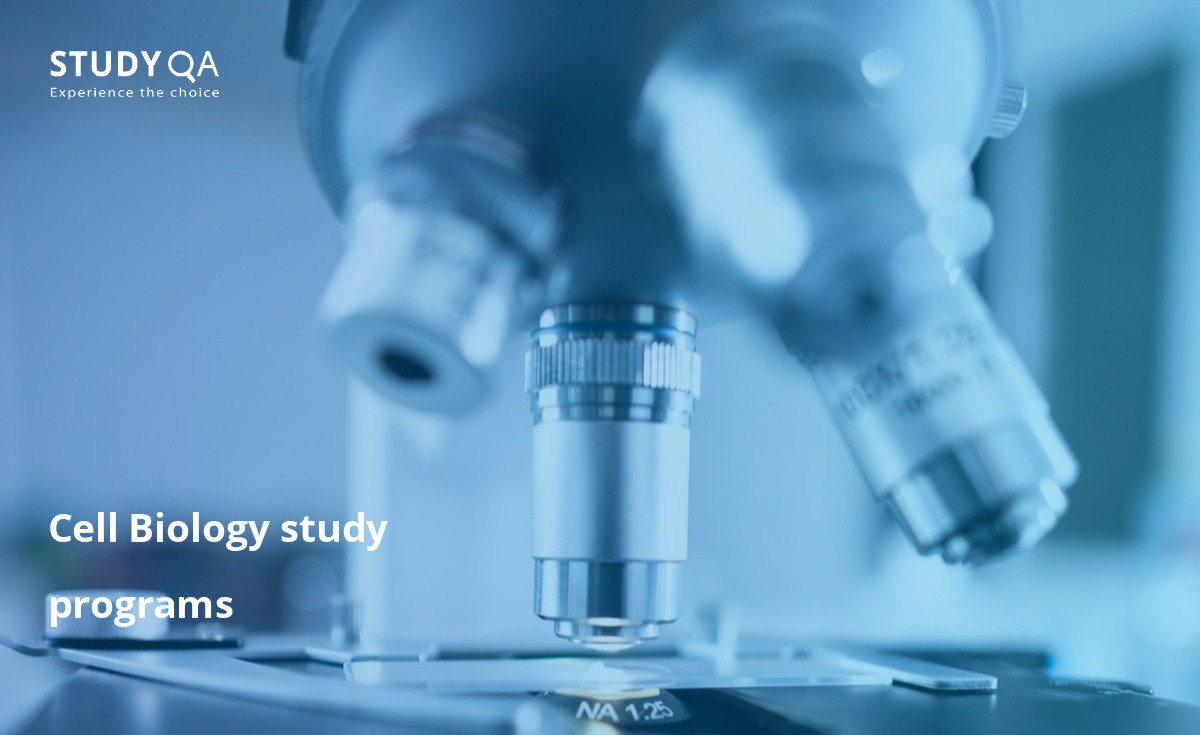
Cell Biology is the discipline that studies the function of cells in the complexity of tissues and organs in the human body in order to understand the mechanisms of disease. The tremendous revolutions in the past decade in light microscopy and biosensors to visualize processes in cells have changed cell biology completely.
Is Cell Biology the program for me?
The program is looking for students who:
• are interested in the molecular and cellular mechanisms underlying disease
• are excited about visualizing cells in action using live cell microscopy
• have an interest to learn state-of-the-art single-cell microscopy
• are creative and want to design their own genetically encoded biosensors to probe molecular disorders responsible for diseases such as cancer, infection, sterility, and problems related to aging
• enjoy lab work and working in a dynamic research team using sophisticated microscopical techniques
• may want to develop novel state-of-the-art image analysis software or microscopy driver software (optional)
• want to pursue a scientific career in top life sciences research departments
What you will be studying during this degree?
Cellular biology is a branch of biological science that examines the structure and function of cells in animals, plants, and microbes.
As well as learning about the lifecycle of individual cells and the crucial processes they perform, you’ll see how they work together to form tissues and embryos. You’ll understand the roles of cells in ill health, and look into groundbreaking research that aims to fight diseases like cancer, Alzheimer’s, and diabetes.
You'll be at the forefront of international research and debate in the field if you study cellular biology abroad. You'll interact with academic luminaries, study in state-of-the-art spaces, and create lifelong memories.
Levels of degrees in Cellular Biology
Cellular biology bachelor's degrees require at least three years of full-time study. The majority of programs let you take a placement year, but doing so will make your course last four years in total. Lectures, seminars, tutorials, workshops, laboratories, and fieldwork trips are the most common teaching methods on cellular biology courses. You’ll mainly be assessed through written and practical exams, but lab reports and research projects are common too.
This Master’s program is dedicated to molecular and cellular biology. It maintains a strong link between reductive molecular and structural approaches, as well as between more integrated approaches of cell biology & organism development and new therapeutic strategies. This multidisciplinary program looks at progress in biology through dialog with other disciplines including physics, chemistry, mathematics, computer science, and mechanics.
A Cell Biology PhD would give you the opportunity to take on a three to four-year research project into the inner workings of cells. Your research may involve investigating cell-to-cell communication, the potential use of stem cells, or researching the difference between cells from a healthy individual compared to those with a certain disease.
What can you do after you graduate?
A bioscience qualification can lead to a range of career opportunities and a qualification in cell biology is no exception. Many employees value highly that bioscientists possess numerical, analytical, and communication skills and are often computer literate. They appreciate that bioscientists are able to take different approaches to solve problems and bring to that approach a critical awareness that is perhaps not so keenly developed in others.
A number of different types of research institutions employ cell biologists to conduct academic or industrial research. Cellular Biology majors are also well prepared to enter medical, veterinary, or pharmacy school.
Study programs (68)





Student Accommodation
 11 place
StudyQA ranking:
16515 pts.
No. Students:
14700
Frgn. Students:
4900
No. Staff:
7000
Languages:
English
Phone:
+4402075895111
Fax:
+4402078237685
11 place
StudyQA ranking:
16515 pts.
No. Students:
14700
Frgn. Students:
4900
No. Staff:
7000
Languages:
English
Phone:
+4402075895111
Fax:
+4402078237685
 1 place
StudyQA ranking:
12347 pts.
No. Students:
22348
Frgn. Students:
5655
No. Staff:
12510
Languages:
English
Phone:
+441865270000
Fax:
+441865270708
1 place
StudyQA ranking:
12347 pts.
No. Students:
22348
Frgn. Students:
5655
No. Staff:
12510
Languages:
English
Phone:
+441865270000
Fax:
+441865270708
 16 place
StudyQA ranking:
9172 pts.
No. Students:
26700
Frgn. Students:
7000
No. Staff:
6840
Languages:
English
Phone:
+4402076792000
16 place
StudyQA ranking:
9172 pts.
No. Students:
26700
Frgn. Students:
7000
No. Staff:
6840
Languages:
English
Phone:
+4402076792000
 91 place
StudyQA ranking:
9128 pts.
No. Students:
21555
No. Staff:
6138
Languages:
English
Phone:
+4401179289000
Fax:
+441179251424
91 place
StudyQA ranking:
9128 pts.
No. Students:
21555
No. Staff:
6138
Languages:
English
Phone:
+4401179289000
Fax:
+441179251424
 8 place
StudyQA ranking:
7620 pts.
No. Students:
11000
Frgn. Students:
2135
No. Staff:
2000
Languages:
English
Phone:
+12034324771
Fax:
+12034326167
8 place
StudyQA ranking:
7620 pts.
No. Students:
11000
Frgn. Students:
2135
No. Staff:
2000
Languages:
English
Phone:
+12034324771
Fax:
+12034326167
 601–800 place
StudyQA ranking:
7434 pts.
Languages:
English
Phone:
+441413313000
601–800 place
StudyQA ranking:
7434 pts.
Languages:
English
Phone:
+441413313000

 6 place
StudyQA ranking:
6984 pts.
No. Students:
19515
No. Staff:
9823
Languages:
English
Phone:
+441223337733
Fax:
+441223332332
6 place
StudyQA ranking:
6984 pts.
No. Students:
19515
No. Staff:
9823
Languages:
English
Phone:
+441223337733
Fax:
+441223332332



















 Currency
 EUR
EUR GBP
GBP KZT
KZT INR
INR RUB
RUB